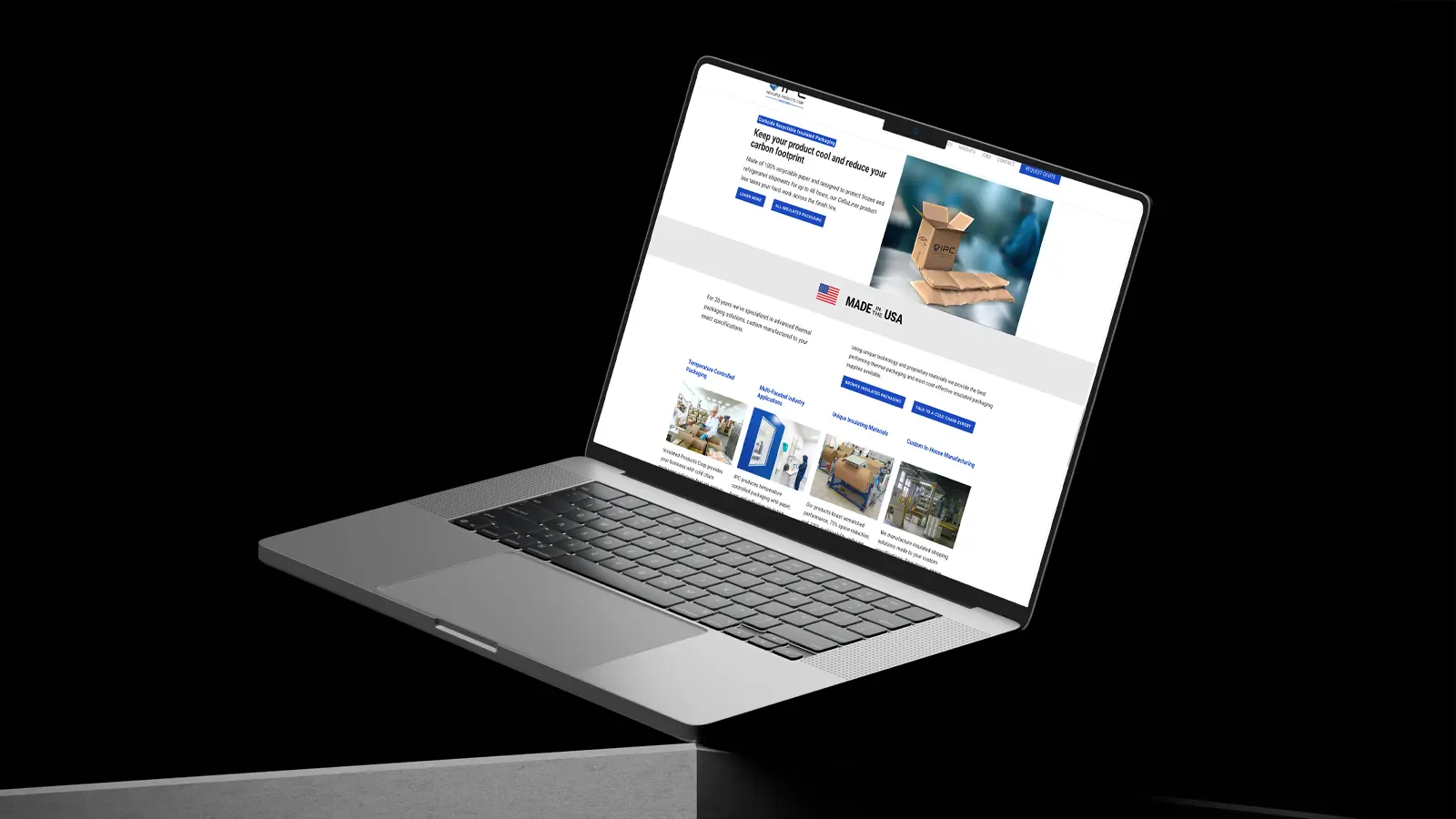
SEO Strategy Case Study
An industrial packaging manufacturer reversed a year-long decline in organic traffic with a focused SEO and newsletter strategy, achieving a 20% lift in new users within three months and sustaining double-digit growth through the typically slow winter season.
Background
The Los Angeles-based company manufactures temperature-controlled packaging for logistics, food, and pharmaceutical distributors. By mid-2024, organic traffic had fallen 7% year-over-year despite strong brand equity. Core products such as insulated containers and pallet covers ranked low, while secondary items like gel packs dominated search visibility. The site averaged 70,000 monthly visitors but engagement lagged, and the audience was concentrated in California and New York—leaving key industrial regions untapped.
The Challenge
The campaign began in August, just ahead of the cold chain industry’s seasonal downturn. Historically, winter months deliver the weakest performance for temperature-controlled packaging, as most purchasing activity peaks in summer when shipping volume and spoilage risk are highest. Despite this headwind, the goal was to reverse the downward trend and establish predictable, sustainable traffic patterns heading into 2025.
Strategy
The four-month plan combined technical cleanup, strategic content development, and coordinated newsletter integration. The team conducted a full content audit, rebuilt product pages around buyer intent, and introduced comparison tools such as ROI and cost calculators. Technical SEO fixes—page speed, internal linking, and schema—improved crawlability.
Email campaigns were restructured to align with keyword themes, each linked to dedicated landing pages designed to capture both direct and organic visitors. By fall, the campaign expanded into geographic targeting, testing whether B2B buyers used local search. New “industrial packaging in Virginia” landing pages validated that hypothesis, vaulting the state into the top three traffic sources. Product hierarchy was also refined so flagship products like PopupLiner reclaimed top rankings.
Results
From September to October 2024, new users climbed 20%, engagement rose to nearly 80 seconds, and newsletter-driven visits more than doubled from 500 to 1,200. Even through November and December—traditionally slow months for the cold chain industry—traffic held steady, ending the year up 11% overall. The new calculator tool became the second most-visited page on the site, driving both engagement and repeat visits.
Key Insights
The campaign showed that newsletters, when paired with SEO-focused landing pages, can produce compounding traffic gains. Geographic intent proved surprisingly strong in B2B search behavior, and consistent engagement metrics indicated the audience was becoming better qualified. By managing internal link structures and elevating priority products, the company corrected ranking imbalances without sacrificing organic reach.
Notably, sustaining growth during a low-demand season underscored the long-term strength of the strategy—positioning the company to capitalize on peak summer demand with a stronger content and visibility foundation already in place.
Conclusion
In just 90 days, the manufacturer achieved a 20% surge in new users, reestablished core product visibility, and turned its newsletter into a predictable growth engine—even during the slowest period of its business cycle. With the groundwork laid, the company is now entering its peak season equipped for scalable, compounding growth across new regions and product lines.
Results drawn from an anonymized four-month campaign, August–December 2024.