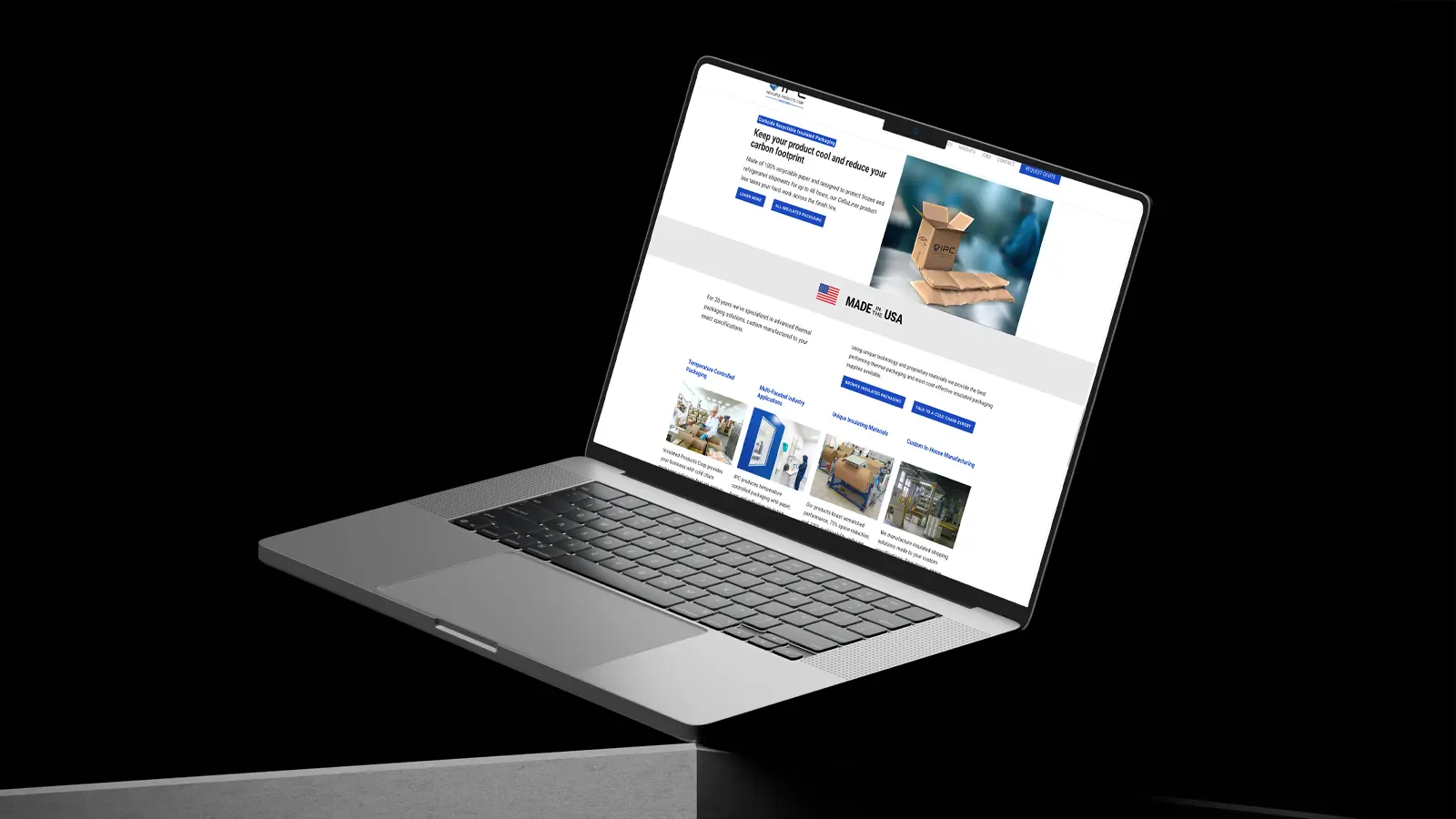
How a complete lead nurturing system moved an LA insulated packaging manufacturer from industry worst-practice to top 1% performance
Industry: B2B Manufacturing (Insulated Packaging)
Location: Los Angeles, CA
Average Deal Size: $1,500 – $8,000
Timeline: June – December 2024
Implementation: ~1 week initial, iterative refinement and documentation across six months
The bottom line
Most B2B companies focus on lead generation but ignore lead nurturing. They capture the form submission, maybe send one email, then wonder why nothing closes. This LA packaging manufacturer had the same problem: good SEO, steady form fills, terrible conversion.
I built a complete b2b lead nurturing system that automated initial response, ongoing education through newsletters, and re-engagement campaigns for non-responders. Most B2B companies take 47 hours to respond to leads—we got them responding in under 5 minutes. Then we kept leads warm through the entire sales cycle with systematic touch points.
The client reported “substantial” revenue impact but won’t share specifics. Industry research shows this kind of change typically produces 21-100x increases in conversion rates.
The real problem hiding behind good SEO
They had decent search rankings. Form submissions were coming in.
The first assumption was SEO quality—maybe the leads were bad. But digging deeper revealed something different: the leads were fine. They were just ice cold by the time anyone responded.
Their workflow looked standard enough. Form comes in, manager reviews it, forwards to the right salesperson. That salesperson gets to it when they get to it—somewhere between their current calls, meetings, and whatever else is on their plate. Response time? Hours to days, completely at the mercy of individual schedules. No accountability, no tracking, just… whenever.
For deals worth $1,500 to $8,000 each, this was unacceptable. Research shows that when you don’t contact a lead within the first day, your chance of qualifying them drops by 6,000%. Not a typo. Six thousand percent.
Even worse: 78% of customers buy from the company that responds to their inquiry first. Every hour of delay wasn’t just reducing their chances—it was actively handing business to faster competitors.
The average B2B business takes 47 hours to respond to web leads. This company fit right into that average. And like most companies in that position, they were leaving massive amounts of revenue on the table without realizing it.
What we built
The foundation was already there: WordPress with Gravity Forms feeding into Salesforce via Zapier. But I had to rebuild how it actually worked. Modified the form fields to capture better information. Added new staging in Salesforce and restructured what the existing stages meant. Extended the system to auto-generate email drafts in Outlook. Added the Salesforce extension so everything could be updated from the inbox without switching tools.
I also experimented with a GPT-powered summarizer to process form submissions automatically. Mixed results at the time—GPTs weren’t great at conditional logic yet, and I needed them to intelligently suggest products based on form inputs. More on that later.
The key was making automation intelligent without making it robotic. Each form submission generated a templated email draft customized to what the prospect actually asked about. Extra text for edge cases included by default—the operator just deleted what wasn’t relevant. With text snippet tools handling common scenarios (sample requests, disqualifications, quote presentations, IPC signatures), the whole process became fill-in-the-blanks fast.
Initial response: under 5 minutes. Follow-up response: another 5 minutes.
What happens in those 10 minutes? The operator looks at the prospect’s website, understands their business and needs, then makes educated guesses about which products fit. This company had roughly 15 different insulated packaging products. Based on the form input and business context, suggesting 2-3 specific products was the goal. That contextual intelligence—matching their business to the right products—couldn’t be fully automated yet, but the system made it fast.
Total time from inquiry to quoting phase: roughly 10 minutes.
Initial deployment took about a week—mostly conversations about business logic, figuring out what questions mattered and what responses worked. Adding new fields and finding gaps in the workflow was part of that process. Then iterative refinement over the next six months. Created Loom documentation for the Salesforce extension training, built templates for edge cases that could be quickly inserted, and eventually trained the sales manager to run it independently. The sales manager had been a catch-all role handling various tasks—we shifted their responsibilities to focus on this first-contact position, which made the whole system work.
The complete b2b lead nurturing system
Fast response was just the entry point. B2B sales cycles are long—60 to 90 days or more. A prospect who fills out a form today might not be ready to buy for months. Without systematic nurturing, they forget about you or find a competitor who stays in touch.
I built a four-stage nurturing system that kept leads warm through the entire sales cycle:
Stage 1: Immediate Response (Day 1, <5 minutes) The automated response system got prospects from inquiry to quote stage in under 10 minutes. This put them in the top 1% of B2B companies for response speed and captured interest while it was hot.
Stage 2: Ongoing Education (Weeks 1-4+) Newsletter campaigns via MailerLite, 2-4 times per month. Content was contextual and valuable, not sales-heavy:
- Seasonal relevance: “Summer heatwave driving up shipping temps? Here’s how X product maintains cold chain”
- Cost comparisons: “1-day overnight shipping vs 3-day passive transport with insulated packaging—real cost analysis”
- Sustainability angles: Recyclability of different insulation materials, environmental impact
I’d pitch different pieces to see what resonated. The goal was keeping the brand top-of-mind while educating prospects on use cases they might not have considered.
Stage 3: Re-engagement (30-day check-in) Built a macro in Word that pulled non-responders from Salesforce by stage—leads who hadn’t moved forward in 30 days. The message was direct: “Hey, you reached out about [their inquiry]. Wondering if we could still help or if something has changed on your end?”
Updated the Salesforce stage on send so we tracked re-engagement attempts. This caught leads before they went completely cold and gave them an easy way back in without feeling like we’d forgotten them.
Stage 4: Qualified Sales Handoff Only leads who engaged through the first three stages reached the sales team. This meant salespeople spent time on warm, educated prospects instead of chasing cold form fills. The quoting department and salesperson worked together on qualified opportunities—two people making the client feel taken care of.
The system ensured every lead got immediate response, regular value-add content, re-engagement if they went quiet, and human touch at the right moment. That’s b2b lead nurturing that actually works.
Why speed actually matters in B2B
There’s this misconception that B2B sales don’t need the instant gratification of e-commerce. That because you’re dealing with businesses and longer sales cycles, a few hours or days of delay doesn’t matter much.
The data says otherwise.
Responding within 5 minutes increases conversion rates by up to 100x compared to waiting 30 minutes. Leads contacted within 5 minutes are 21 times more likely to convert than those contacted after 30 minutes. You’re 100 times more likely to even connect with a lead in the first five minutes versus waiting just half an hour.
The drop-off isn’t gradual—it’s a cliff. After the 5-minute mark, your odds of qualifying a lead plummet by 80%. Wait an hour instead of 5 minutes? Your conversion rate drops to 36% of what it could have been.
Only 1% of B2B companies respond in under 5 minutes. We got this manufacturer into that 1%.
Why b2b lead nurturing systems matter
Speed alone isn’t enough. You can respond in 5 minutes and still lose the deal if you don’t stay in touch during the decision process.
B2B buying cycles are measured in weeks or months, not minutes. The person who filled out the form might need to get budget approval, compare vendors, build internal consensus, or simply wait for the right project timing. If you respond once and then go quiet, they’ll forget about you. When they’re ready to buy, they’ll remember the company that kept showing up with helpful content.
That’s why the newsletter campaigns mattered. Contextual, valuable content—not sales pitches. Summer heatwave driving up shipping temps? Here’s how insulated packaging maintains cold chain integrity. Comparing overnight shipping costs to 3-day passive transport with the right insulation. Recyclability concerns for sustainable operations.
Every newsletter was a reminder: we understand your business, we have solutions, we’re here when you’re ready.
The re-engagement campaigns caught leads at the 30-day mark—right before they’d completely forget they reached out. “Hey, you contacted us about [their inquiry]. Wondering if we could still help or if something changed?” Simple, direct, low-pressure. It gave them an easy way back in without feeling abandoned or pushy.
The combination of immediate response + ongoing value + timely re-engagement kept leads warm through the entire sales cycle. By the time they reached the sales team, they were educated, engaged, and ready to talk specifics.
The two-person quoting system
Speed was critical, but so was the hand-off. Once we qualified the lead and understood what they needed, we’d loop in the salesperson and the quoting department—two people working on their case simultaneously.
This wasn’t about efficiency. It was about the client feeling taken care of. High-ticket B2B sales still require trust and attention. The automation got us to the right conversation quickly. The human touch closed the deal.
The system handled increasing volume without proportional increases in resources. Response times stayed consistent regardless of how many leads came in. The Salesforce Kanban view gave everyone clear pipeline visibility. No more leads sitting in someone’s inbox, forgotten.
The results (and why I can’t share specifics)
I don’t have permission to share exact revenue numbers or close rates. What the client confirmed: the impact was “substantial.”
What we can measure: we moved them from industry average (47+ hours response time) to top 1% performance (under 5 minutes). From “hours to days with no accountability” to “10 minutes to quote stage with full pipeline visibility.” From sporadic contact to systematic nurturing with newsletters and re-engagement campaigns.
Industry research shows what that kind of change typically produces. Companies making this shift see conversion rates increase 21-100x. Typical B2B close rates range from 20-50%. For a business with $1,500-$8,000 deal sizes operating in that range, improving response time from hours to minutes AND adding systematic nurturing isn’t an incremental change—it’s exponential.
The math: if you’re converting at 20% with fast response and systematic nurturing, and slow response with no nurturing drops that by 80%, you’re losing roughly $76,000 per 100 leads at their average deal size. Scale that across a year of leads and the impact becomes obvious even without seeing their books.
What this demonstrates
This wasn’t about implementing expensive enterprise marketing automation platforms. Total monthly cost: Zapier subscription, Salesforce (they already had it), MailerLite (affordable email platform), and text snippet tools (many are free).
The real work was understanding their business logic well enough to automate the right parts while keeping the human intelligence where it mattered. A complete b2b lead nurturing system that handled immediate response, ongoing education, and re-engagement automatically—but still felt personal because it was contextual.
Most B2B companies know they should respond faster and stay in touch systematically. They just don’t have a system that makes both possible without dramatically increasing headcount or buying expensive software they don’t need.
For service businesses generating leads but struggling with conversion, the problem often isn’t the leads—it’s what happens after the form gets submitted. Fix the initial response AND the ongoing nurturing, and everything downstream improves.
Tech stack breakdown
Lead capture: WordPress + Gravity Forms
Automation bridge: Zapier
Email management: Microsoft Outlook (auto-draft generation) + OpenAI (summarizer experiment)
CRM: Salesforce (Kanban pipeline view)
CRM integration: Salesforce for Outlook extension
Newsletter platform: MailerLite (2-4x monthly campaigns)
Re-engagement automation: Word macro + Salesforce stage exports
Efficiency tools: Text snippet automation (various tools available, many free)
Key workflow triggers:
- Form submit → Zapier → Outlook draft + Salesforce opportunity creation
- Conditional email templates based on form data
- Text snippets for: samples, disqualification, quote presentation, initial contact, IPC signature
- Newsletter segmentation by stage and engagement
- 30-day non-responder exports → re-engagement macro → stage update on send
Training & documentation:
- Loom video walkthroughs for Salesforce extension training
- Templates for edge cases (quick insertion)
- Handoff documentation for system management
- Newsletter content strategy and campaign calendar
- Iterative refinement over six months (June-December 2024)
Notes on AI/automation limitations: At the time, GPTs weren’t effective at processing conditional logic for product recommendations. I attempted to have the AI determine which of the 15 products to suggest based on form inputs, but it failed consistently. With current fine-tuning capabilities and more refined rule sets, this could likely work now—potentially automating more of the qualification-to-quoting process and reducing cognitive load on whoever manages the system. The goal would be moving toward a more hands-off initialization that still gets prospects to quoting phase quickly.
Who this works for
Companies generating leads but not closing them—especially B2B businesses with longer sales cycles where prospects need education and multiple touchpoints.
B2B service businesses where every lead has real value and can’t afford to let prospects go cold during the decision process. High-ticket sales ($1,000+) where improving close rates by even a few percentage points creates massive revenue differences.
Businesses that know they should respond faster AND stay in touch systematically but don’t have a b2b lead nurturing system that makes it possible without hiring more people.
If your SEO is working but your conversions aren’t, the problem probably isn’t your traffic. It’s your response time and lack of ongoing nurturing between inquiry and purchase.
How automated lead response moved an LA insulated packaging manufacturer from industry worst-practice to top 1% performance
Industry: B2B Manufacturing (Insulated Packaging)
Location: Los Angeles, CA
Average Deal Size: $1,500 – $8,000
Timeline: June – December 2024
Implementation: ~1 week initial, iterative refinement and documentation across six months
The bottom line
Most B2B companies take 47 hours to respond to leads. This manufacturer was taking hours to days. We built a system that gets them to quote stage in under 10 minutes—putting them in the top 1% of B2B companies for response speed.
The client reported “substantial” revenue impact but won’t share specifics. Industry research shows this kind of change typically produces 21-100x increases in conversion rates.
The real problem hiding behind good SEO
They had decent search rankings. Form submissions were coming in.
The first assumption was SEO quality—maybe the leads were bad. But digging deeper revealed something different: the leads were fine. They were just ice cold by the time anyone responded.
Their workflow looked standard enough. Form comes in, manager reviews it, forwards to the right salesperson. That salesperson gets to it when they get to it—somewhere between their current calls, meetings, and whatever else is on their plate. Response time? Hours to days, completely at the mercy of individual schedules. No accountability, no tracking, just… whenever.
For deals worth $1,500 to $8,000 each, this was unacceptable. Research shows that when you don’t contact a lead within the first day, your chance of qualifying them drops by 6,000%. Not a typo. Six thousand percent.
Even worse: 78% of customers buy from the company that responds to their inquiry first. Every hour of delay wasn’t just reducing their chances—it was actively handing business to faster competitors.
The average B2B business takes 47 hours to respond to web leads. This company fit right into that average. And like most companies in that position, they were leaving massive amounts of revenue on the table without realizing it.
What we built
The foundation was already there: WordPress with Gravity Forms feeding into Salesforce via Zapier. But I had to rebuild how it actually worked. Modified the form fields to capture better information. Added new staging in Salesforce and restructured what the existing stages meant. Extended the system to auto-generate email drafts in Outlook. Added the Salesforce extension so everything could be updated from the inbox without switching tools.
I also experimented with a GPT-powered summarizer to process form submissions automatically. Mixed results at the time—GPTs weren’t great at conditional logic yet, and I needed them to intelligently suggest products based on form inputs. More on that later.
The key was making automation intelligent without making it robotic. Each form submission generated a templated email draft customized to what the prospect actually asked about. Extra text for edge cases included by default—the operator just deleted what wasn’t relevant. With text snippet tools handling common scenarios (sample requests, disqualifications, quote presentations, IPC signatures), the whole process became fill-in-the-blanks fast.
Initial response: under 5 minutes. Follow-up response: another 5 minutes.
What happens in those 10 minutes? The operator looks at the prospect’s website, understands their business and needs, then makes educated guesses about which products fit. This company had roughly 15 different insulated packaging products. Based on the form input and business context, suggesting 2-3 specific products was the goal. That contextual intelligence—matching their business to the right products—couldn’t be fully automated yet, but the system made it fast.
Total time from inquiry to quoting phase: roughly 10 minutes.
Initial deployment took about a week—mostly conversations about business logic, figuring out what questions mattered and what responses worked. Adding new fields and finding gaps in the workflow was part of that process. Then iterative refinement over the next six months. Created Loom documentation for the Salesforce extension training, built templates for edge cases that could be quickly inserted, and eventually trained the sales manager to run it independently. The sales manager had been a catch-all role handling various tasks—we shifted their responsibilities to focus on this first-contact position, which made the whole system work.
Why speed actually matters in B2B
There’s this misconception that B2B sales don’t need the instant gratification of e-commerce. That because you’re dealing with businesses and longer sales cycles, a few hours or days of delay doesn’t matter much.
The data says otherwise.
Responding within 5 minutes increases conversion rates by up to 100x compared to waiting 30 minutes. Leads contacted within 5 minutes are 21 times more likely to convert than those contacted after 30 minutes. You’re 100 times more likely to even connect with a lead in the first five minutes versus waiting just half an hour.
The drop-off isn’t gradual—it’s a cliff. After the 5-minute mark, your odds of qualifying a lead plummet by 80%. Wait an hour instead of 5 minutes? Your conversion rate drops to 36% of what it could have been.
Only 1% of B2B companies respond in under 5 minutes. We got this manufacturer into that 1%.
The two-person quoting system
Speed was critical, but so was the hand-off. Once we qualified the lead and understood what they needed, we’d loop in the salesperson and the quoting department—two people working on their case simultaneously.
This wasn’t about efficiency. It was about the client feeling taken care of. High-ticket B2B sales still require trust and attention. The automation got us to the right conversation quickly. The human touch closed the deal.
The system handled increasing volume without proportional increases in resources. Response times stayed consistent regardless of how many leads came in. The Salesforce Kanban view gave everyone clear pipeline visibility. No more leads sitting in someone’s inbox, forgotten.
The results (and why I can’t share specifics)
I don’t have permission to share exact revenue numbers or close rates. What the client confirmed: the impact was “substantial.”
What we can measure: we moved them from industry average (47+ hours response time) to top 1% performance (under 5 minutes). From “hours to days with no accountability” to “10 minutes to quote stage with full pipeline visibility.”
Industry research shows what that kind of change typically produces. Companies making this shift see conversion rates increase 21-100x. Typical B2B close rates range from 20-50%. For a business with $1,500-$8,000 deal sizes operating in that range, improving response time from hours to minutes isn’t an incremental change—it’s exponential.
The math: if you’re converting at 20% with fast response, and slow response drops that by 80%, you’re losing roughly $76,000 per 100 leads at their average deal size. Scale that across a year of leads and the impact becomes obvious even without seeing their books.
What this demonstrates
This wasn’t about implementing expensive enterprise software. Total monthly cost: Zapier subscription, Salesforce (they already had it), and text snippet tools (many are free).
The real work was understanding their business logic well enough to automate the right parts while keeping the human intelligence where it mattered. Templates that felt personal because they were contextual. Snippets that saved time without sounding robotic. A workflow that scaled because it was designed to scale.
Most B2B companies know they should respond faster. They just don’t have a system that makes it possible. This one did.
For service businesses generating leads but struggling with conversion, the problem often isn’t the leads—it’s what happens after the form gets submitted. Fix that, and everything downstream improves.
Tech stack breakdown
Lead capture: WordPress + Gravity Forms
Automation bridge: Zapier
Email management: Microsoft Outlook (auto-draft generation) + OpenAI (summarizer experiment)
CRM: Salesforce (Kanban pipeline view)
CRM integration: Salesforce for Outlook extension
Efficiency tools: Text snippet automation (various tools available, many free)
Key workflow triggers:
- Form submit → Zapier → Outlook draft + Salesforce opportunity creation
- Conditional email templates based on form data
- Text snippets for: samples, disqualification, quote presentation, initial contact, IPC signature
Training & documentation:
- Loom video walkthroughs for Salesforce extension training
- Templates for edge cases (quick insertion)
- Handoff documentation for system management
- Iterative refinement over six months (June-December 2024)
Notes on AI/automation limitations: At the time, GPTs weren’t effective at processing conditional logic for product recommendations. I attempted to have the AI determine which of the 15 products to suggest based on form inputs, but it failed consistently. With current fine-tuning capabilities and more refined rule sets, this could likely work now—potentially automating more of the qualification-to-quoting process and reducing cognitive load on whoever manages the system. The goal would be moving toward a more hands-off initialization that still gets prospects to quoting phase quickly.
Who this works for
Companies generating leads but not closing them. B2B service businesses where every lead has real value. High-ticket sales ($1,000+) where improving close rates by even a few percentage points makes massive revenue differences.
Businesses that know they should respond faster but don’t have a system that makes it possible without hiring more people.
If your SEO is working but your conversions aren’t, the problem probably isn’t your traffic. It’s your response time.